Laser Therapy and Data-Driven Therapeutic Design: From Reductive Choices to Structured Systems
[POntological Limitations and the Data-Driven Mandate]
The current paradigmatic approach to therapeutic selection in clinical practice, particularly in complex fields like urology and urogynecology, is primarily disjointed and reductive. Treatment decisions are often made based on clinical guidelines, localized anatomical variables, and physician experience, treating symptoms as independent inputs to a linear selection process. However, the real-world clinical setting is inherently complex; patient outcomes are not single-factor dependent, but rather influenced by dynamic and non-linear interactions across physiological systems, comorbidities, functional status, and individual patient preferences. This research addresses this critical limitation by proposing a definitive transformation of the medical ontology: the shift from viewing treatment selection as a singular linear choice, to conceptualizing it as a high-dimensional, highly-organized, and structured decision network. Leveraging an immense real-world clinical dataset accumulated from high-volume, longitudinally followed surgical and medical practices, we apply high-order network science, discrete mathematics (including graph theory and topology), and data science techniques like unsupervised clustering. This allows us to model the intricate, discrete relational structures linking patient characteristics, available treatment modalities, and dynamic longitudinal outcomes, enabling a systemic-level interpretation of therapeutic pathways.
[Discrete Mathematics, High-Order Networks, andmotif Identification]
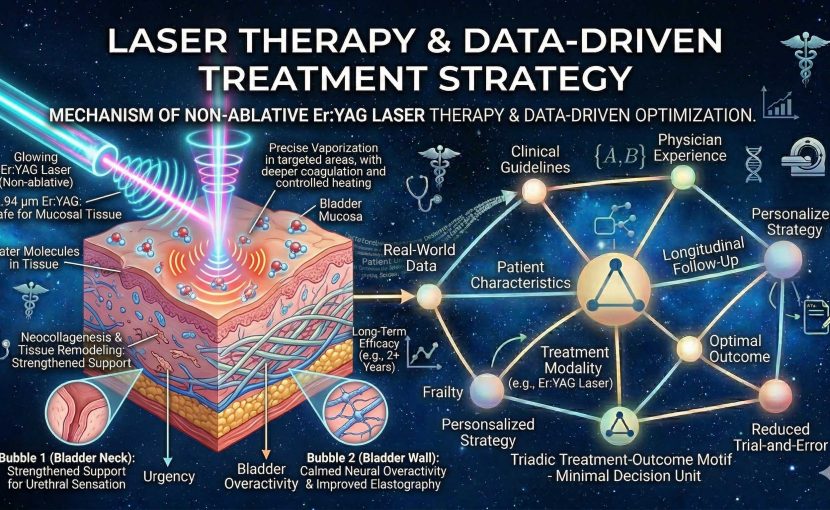
The methodological foundation of this structural framework lies in the quantitative transformation of diverse clinical data into structured, actionable networks. A key innovation of this work is the rigorous identification and constraint of higher-order topological patterns within these discrete relational decision structures. Specifically, we have operationalized the use of high-order triadic structures (three-element motifs)—such as a unique triangular unit representing the optimal interface between a defined patient-symptom-comorbidity profile, a specific treatment modality, and a dynamic outcome trajectory—as the minimal, robust unit of structured clinical insight and decision-making. By treating these high-order network structures as dynamic mathematical objects, we can perform unsupervised clustering on vast datasets to identify otherwise unobservable, reproducible response patterns across latent patient subgroups. We demonstrate this methodology primarily through the systemic evaluation and design of non-ablative Er:YAG laser therapy for conditions such as stress urinary incontinence (SUI), overactive bladder (OAB), and chronic genitourinary syndromes. This structural approach shifts the analytical focus from a simple binary evaluation of efficacy to the data-driven identification and prediction of systemic response patterns within defined network structures.
[Integrated Vision and Paradigmatic Transformation]
This visual and conceptual framework, illustrated as a bridge between a detailed, narrative clinical world and a high-order mathematical decision network, conveys a definitive paradigmatic shift. We are transforming reductionist clinical decision-making—which views symptoms as disconnected biological signals—into a systemic, data-driven methodology. On the left side of this conceptual vision, traditional biological elements analyze organs independently. On the right, digital interfaces and artificial intelligence (AI) precise represent the integration of real-world patient narratives and clinical data. The central triangular structure symbolizes the core innovation: the triadic decision motif that enables precise therapeutic design. By unifying clinical vocabulary, patient experiences, objective biological markers, and anatomical structures into sophisticated relational models, Symptom Structure Science establishes a powerful new interface between quantitative precision and qualitative human suffering. This unifying framework enables a nuanced, data-driven interpretation of the true patient condition, facilitating the operationalization of precise, personalized, and truly patient-centered medicine. Ultimately, this work establishes a new field of data-driven therapeutic design, where treatment is guided not only by a single diagnosis, but by the underlying topological structure of a patient’s conditions.